Every successful garden starts from the ground up quite literally. Whether you are building a new backyard landscape, raising vegetable beds, or planning a large commercial green project, the quality of your soil determines everything that follows. When you start working on a big space, the question naturally arises: how do you buy garden soil in large quantity without compromising on quality?
Garden soil is more than dirt. It’s a living blend of minerals, organic matter, water, and air all working together to feed plants and sustain growth. Buying in bulk can save you time, effort, and cost, but only if you understand the type of soil you need, how to prepare it, and how to maintain its health after delivery.
This detailed guide walks you through everything from understanding soil types to delivery tips and preparation techniques. By the end, you’ll know exactly how to make the most of your garden soil large quantity purchase.
Table of contents
- Why Soil Quality Matters More Than Quantity
- Understanding Different Soil Types
- Planning Your Bulk Soil Purchase
- Preparing Soil for Use
- Choosing Between Organic and Inorganic Bulk Soil
- Storing Bulk Soil Correctly
- Common Mistakes to Avoid
- Enhancing Bulk Soil for Long-Term Fertility
- The Garden Spade: Your Partner in Soil Work
- Environmental Advantages of Buying in Bulk
- Conclusion
- FAQs
Why Soil Quality Matters More Than Quantity
It’s easy to assume that more soil automatically means better results, but the truth is quite the opposite. A truckload of poor-quality soil can harm your plants more than it helps. Healthy soil contains a balanced mixture of organic matter, nutrients, and living organisms like worms and microbes. These unseen elements regulate drainage, air movement, and nutrient cycles — all vital for plant roots.
When soil is too sandy, it drains quickly and fails to retain nutrients. When it’s too clay-heavy, it becomes dense, airless, and waterlogged. The best soil offers both structure and softness — firm enough to anchor roots, yet porous enough to let them breathe.
That’s why, when buying in bulk, quality must always come before price. Choosing the right soil composition ensures your investment produces lasting benefits.
Understanding Different Soil Types
Before ordering soil in bulk, it helps to understand the five main soil types. Each one behaves differently and supports certain kinds of plants better than others.
Clay soil is nutrient-rich but tends to be compact and heavy. It holds water well but drains slowly. It’s excellent for moisture-loving plants like hydrangeas or willows, but it needs regular aeration.
Sandy soil feels coarse and drains quickly. It’s perfect for herbs and plants that prefer dry roots, like lavender or rosemary. However, it often needs organic matter added to retain nutrients.
Silt soil is soft and fertile but can become compacted when wet. It suits many garden plants if managed carefully.
Peaty soil is dark, rich, and holds moisture, making it great for acid-loving plants such as azaleas and ferns.
Loamy soil is the ideal balance — part sand, part silt, and part clay. It’s fertile, well-draining, and holds moisture without becoming soggy. Most home gardens thrive best in loam.
When buying garden soil in large quantity, many suppliers offer blends for example, “premium loam mix” or “raised bed blend” that combine these elements for balanced results.
Planning Your Bulk Soil Purchase
Buying garden soil in large quantity is an investment. To make it worthwhile, you need to plan the logistics as carefully as the purchase itself.
Start by calculating exactly how much soil you’ll need. Measure the length, width, and depth of your garden bed or landscape area. Multiply them to get the total cubic feet, then divide by 27 to convert to cubic yards — the standard measurement for bulk soil. For example, a 10×4-foot bed filled to one foot deep equals about 1.5 cubic yards.
Once you know the volume, always order slightly more than required — around 10–15% extra — to account for settling and compaction after watering.
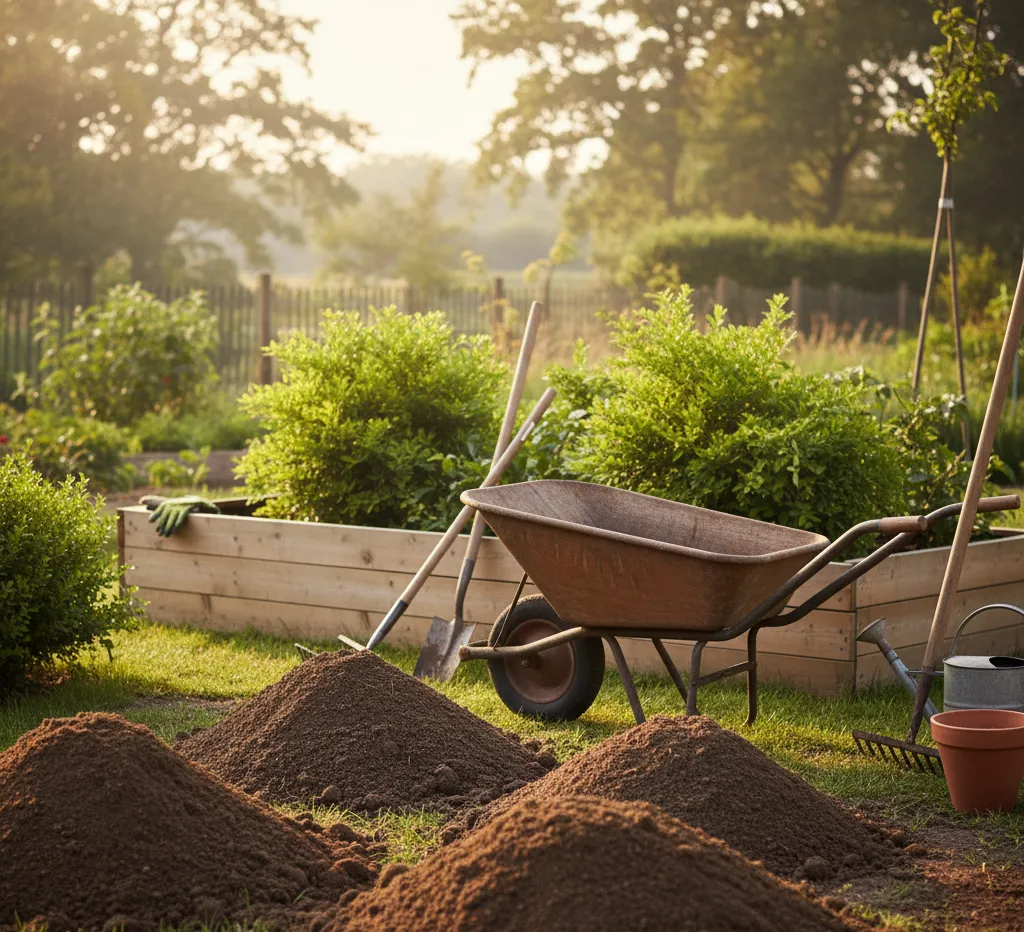
Next, consider delivery logistics. Bulk soil is typically delivered by dump truck, so check your driveway access or nearby unloading space. If your garden is far from the delivery spot, you may need a wheelbarrow or small loader to move it efficiently.
Finally, always ask suppliers about the soil’s composition, organic content, and whether it’s screened for weeds or debris. A reputable company will provide this information openly.
Preparing Soil for Use
Even high-quality bulk soil needs preparation before planting. Freshly delivered soil might look perfect, but it often settles or clumps due to transport and moisture changes.
Start by spreading the soil evenly across your beds using a garden spade or rake. This tool — simple yet powerful — helps loosen compacted areas and distribute soil uniformly. Next, remove any visible debris or stones.
After leveling, mix in compost or well-rotted manure to enrich the soil with organic nutrients. This step activates microbial life and enhances structure. Water the soil lightly to help it settle naturally before planting.
If you’re creating new garden beds, consider layering compost, topsoil, and mulch for maximum fertility and moisture retention. These layers mimic nature’s own soil-building process.
Choosing Between Organic and Inorganic Bulk Soil
Suppliers generally offer two broad categories: organic and inorganic.
Organic soil is made from natural composted materials and contains beneficial microbes. It’s ideal for edible gardens or anyone practicing eco-friendly gardening. It may cost a little more but pays off in long-term plant health.
Inorganic soil mixes use mineral additives and synthetic fertilizers. They’re cheaper and suitable for ornamental landscaping where nutrient cycling is less critical.
When buying garden soil in large quantity, blending both types can sometimes be effective — the organic portion improves structure and fertility, while the inorganic portion enhances stability and cost-efficiency.
Storing Bulk Soil Correctly
If you can’t use all your soil immediately, store it properly to maintain its quality. Keep it under a tarp or in a covered shed to prevent rain from washing away nutrients or compacting the surface.
Avoid letting it sit uncovered for weeks, as exposure to wind and sunlight can dry out microbes and encourage weeds. If stored longer than a season, mix in fresh compost before using again to rejuvenate its vitality.
Common Mistakes to Avoid
Many gardeners make the mistake of rushing the process once their bulk soil arrives. One common error is failing to inspect the soil before spreading. Always check for moisture consistency and smell — sour or chemical odors are red flags.
Another frequent issue is choosing the wrong type of soil for the intended plants. For example, vegetables prefer loamy or compost-rich soil, while succulents thrive in sandy mixes. Using a single type for all areas can limit plant performance.
Lastly, don’t compact your soil by walking or driving over it after delivery. Compression removes the air pockets roots need to grow. Use planks or boards if you need to move across freshly spread soil.
Enhancing Bulk Soil for Long-Term Fertility
The best soil keeps improving year after year. To maintain fertility, regularly incorporate organic matter such as compost, leaf mold, or worm castings. These enrich the soil with nitrogen and beneficial bacteria.
Adding biochar can also help improve soil aeration and retain carbon, supporting long-term sustainability. Mulching the surface prevents erosion and conserves water during hot seasons.
Crop rotation — especially in vegetable gardens — is another vital technique. By changing plant types seasonally, you prevent nutrient depletion and allow the soil to recover naturally.
The Garden Spade: Your Partner in Soil Work
While machines can move soil fast, no tool matches the control of a garden spade. It allows precise digging, edging, and mixing when working with large soil quantities.
A strong, flat-edged spade can loosen dense areas without over-turning, helping roots establish evenly. It’s also essential for shaping garden beds and redistributing soil after heavy rains.
In our related article on the Garden Spade, you’ll learn how to select the right spade and use it effectively. Combining proper tools with good soil ensures consistent results across your garden.
Environmental Advantages of Buying in Bulk
Purchasing garden soil in large quantity is not just economical — it’s environmentally responsible. Bulk soil reduces plastic bag waste, minimizes transportation emissions, and supports local suppliers who often source from sustainable composting operations.
By investing in large, single deliveries instead of multiple small ones, you cut down the carbon footprint associated with packaging and fuel. In short, buying in bulk helps both your garden and the planet flourish together.
Conclusion
Soil is the foundation of life in every garden. When you purchase garden soil in large quantity, you’re not just filling space — you’re building a living system that will sustain growth for years.
The process requires planning, from choosing the right type and supplier to preparing, storing, and enriching the soil. But once done correctly, the rewards are lasting. Healthy soil gives rise to vibrant flowers, strong vegetables, and resilient landscapes.
And when paired with the right tool your reliable garden spade working with bulk soil becomes not a chore but a satisfying connection to nature itself.
Whether you’re nurturing a few raised beds or transforming an entire yard, remember: a great garden begins beneath your feet. Invest in good soil, and it will return the favor for generations.
FAQs
What is the best soil for most gardens?
Loamy soil, with its balanced blend of sand, silt, and clay, suits most plants.
How long can I store bulk soil?
If covered properly, up to six months. Mix compost before reuse to restore nutrients.
Is bulk soil cheaper than bagged soil?
Yes. The cost per cubic yard is significantly lower, especially for large gardens.
Can I use leftover soil next year?
Definitely. Just refresh it with organic matter before planting again.
How do I know if soil quality is good?
Good soil has a fresh, earthy smell, crumbles easily, and supports earthworm activity.